
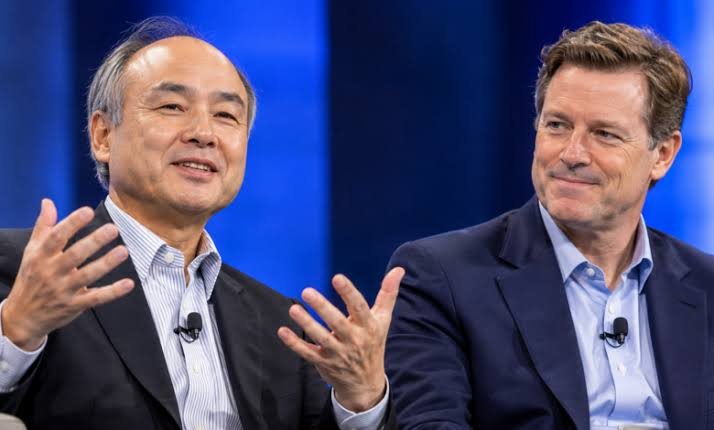

Masayoshi Son and Greg Hayes stand out as two of the most visible corporate leaders of the past decade. One built a technology investment powerhouse from Japan. The other reshaped a major American industrial company into a focused aerospace and defense giant. Their names sometimes appear together in searches, yet public records show no joint company, shared board role, or documented business partnership between them.
This article examines who each man is, the brief 2016 news overlap that links their names in some coverage, how their leadership styles differ, and what their careers reveal about modern corporate strategy. Readers will find clear facts drawn from company histories, leadership timelines, and widely reported events.
Masayoshi Son and Greg Hayes have no documented business partnership or shared company. Son leads SoftBank; Hayes formerly led RTX. Their names mainly link through separate December 2016 news stories about U.S. investment and jobs.
Who Is Masayoshi Son?

Masayoshi Son founded SoftBank in 1981. He remains chairman and CEO of SoftBank Group. Born in 1957 in Tosu, Saga Prefecture, Japan, to a family of Korean descent living in Japan, he studied at the University of California, Berkeley, and earned a degree in economics.
SoftBank started as a software distributor and publisher of computer magazines. Over time it expanded into telecommunications in Japan and later became a major global investor. Son’s early stake in Alibaba, purchased around 2000, became one of the most successful investments in modern business history. SoftBank also acquired Arm Holdings, the British chip design company, and launched the SoftBank Vision Fund, which deployed large sums into technology companies worldwide.
In recent years Son has directed SoftBank’s strategy toward artificial intelligence. SoftBank has committed significant capital to OpenAI and related infrastructure projects, including data-center and computing initiatives. Net worth estimates for Son vary by source and market conditions, reflecting the volatility of SoftBank’s large technology holdings. He continues to speak publicly about long-term technology trends and SoftBank’s role in them.
Son’s approach is founder-driven and highly concentrated. He places large, multi-year bets on technologies he believes will define the future.
Also read :Abella Danger Net Worth 2026: Career & Earnings Breakdown
Who Is Greg Hayes?

Gregory J. Hayes is an American executive best known for leading United Technologies Corporation and then RTX (formerly Raytheon Technologies). Public records place his birth around 1960. He grew up in New York, attended Cornell briefly, and graduated from Purdue University with a degree in economics. He is also a certified public accountant.
Hayes joined Sundstrand Corporation and rose through its ranks. After United Technologies acquired Sundstrand in 1999, he continued advancing inside UTC. He served as chief financial officer from 2008 to 2014, became CEO in late 2014, and was named chairman in 2016.
As CEO he oversaw major portfolio changes. UTC sold Sikorsky, acquired Rockwell Collins, and later spun off Otis Elevator and Carrier. In 2020 the remaining aerospace businesses combined with Raytheon to form Raytheon Technologies, later rebranded RTX. Hayes served as CEO of the combined company and later as executive chairman before stepping down from the board in 2025. He has since taken board roles at other public companies.
Hayes’s career centers on large-scale industrial management, financial discipline, and corporate restructuring. He moved an industrial conglomerate toward a pure-play aerospace and defense focus.
The 2016 News Overlap Involving Masayoshi Son and Greg Hayes
The main public point of contact between the two names is a short window in December 2016. President-elect Donald Trump had campaigned heavily on keeping manufacturing jobs in the United States. Two separate business stories dominated coverage at the same time.
Greg Hayes, as CEO of United Technologies, negotiated with the incoming administration and Indiana officials over Carrier’s planned move of production to Mexico. Carrier agreed to keep roughly 1,000 jobs in Indiana in exchange for state tax incentives and a company investment in the plant. Hayes publicly discussed the decision, noting that automation would still be part of the plant’s future competitiveness and that United Technologies derived a meaningful share of revenue from U.S. government contracts. He stated there was no formal quid pro quo.
Around the same period, Masayoshi Son met with Trump at Trump Tower and announced SoftBank’s intention to invest $50 billion in the United States and support 50,000 jobs. The pledge focused on technology and related investments.
Both stories involved American jobs and investment under the incoming administration. Both received heavy media attention in the same news cycle. No public evidence shows the two men coordinated, met, or participated in each other’s discussions. Their appearance together in later search results and some online articles stems from this chronological overlap rather than any shared business activity.
Leadership Styles Side by Side
Masayoshi Son operates as a founder-investor. SoftBank’s direction tracks his long-term technology views. He has repeatedly made concentrated bets—on internet platforms in earlier decades, on mobile and software later, and more recently on artificial intelligence infrastructure and models. Results have included both substantial gains and high-profile losses. SoftBank’s structure allows him to move capital quickly across countries and sectors.
Greg Hayes built a career inside large, established corporations. His record emphasizes portfolio reshaping, cost management, and integration after mergers. The transformation of United Technologies into a focused aerospace and defense company required successive divestitures, an acquisition, spin-offs, and a major combination with Raytheon. That process demanded careful sequencing, regulatory navigation, and attention to customers in both commercial aviation and government markets.
One leader places capital behind emerging technology platforms. The other optimizes complex industrial systems that already generate large revenue streams. Both have delivered measurable changes at scale, yet they work in different industries and with different risk profiles.
Careers in Context: SoftBank and RTX
SoftBank under Son has become a major technology investment vehicle. Its holdings and funds touch telecommunications, semiconductors, software, and artificial intelligence. The company has faced periods of sharp valuation swings tied to public markets and private company marks.
RTX under Hayes’s leadership (and the transition that followed) operates in aerospace engines, avionics, and defense systems. The company serves commercial airlines and government customers. Its scale and government relationships shape a more regulated operating environment than SoftBank’s investment model.
Neither company lists the other executive in its leadership or board records. SoftBank’s public materials do not reference Hayes in an executive capacity. RTX and United Technologies records do not show Son in any formal role. The absence of documented overlap is consistent across company filings and leadership biographies.
What Readers Can Take Away
Masayoshi Son and Greg Hayes illustrate two common paths to influence in global business. One path is entrepreneurial: founding a company, scaling it through successive technology waves, and deploying large pools of capital against long-horizon trends. The other path is managerial: rising through an established industrial organization, using financial and operational tools to reshape its portfolio, and guiding it through large mergers and spin-offs.
The 2016 Carrier and SoftBank stories both touched themes of American investment and employment. They remain separate events. Treating the two men as partners or collaborators lacks support in public records.
For students of business, the comparison is useful. It highlights how different industries reward different skill sets—visionary capital allocation in technology investment versus disciplined restructuring in aerospace and defense. Both approaches have produced large organizations that employ tens of thousands of people and shape their respective markets.
Accurate information matters. Claims of a personal or corporate relationship between Masayoshi Son and Greg Hayes do not hold up against company histories and leadership timelines. Their careers stand on their own as examples of sustained executive impact in distinct sectors.
FAQs
Are Masayoshi Son and Greg Hayes business partners?
No. Public company records and leadership histories show no joint venture, shared board service, or documented partnership between them.
What is the main link between Masayoshi Son and Greg Hayes?
Their names appear together mainly because both featured in high-profile business news in December 2016—Son with a SoftBank U.S. investment pledge and Hayes with the Carrier jobs agreement in Indiana. The events were independent.
What company is Masayoshi Son best known for leading?
He founded SoftBank and continues as chairman and CEO of SoftBank Group. The company is known for technology investments, including early stakes in major platforms and later focus on artificial intelligence and semiconductors.
What major companies has Greg Hayes led?
He served as CEO and chairman of United Technologies and then as CEO and later executive chairman of RTX after the combination of United Technologies’ aerospace businesses with Raytheon.
Do Masayoshi Son and Greg Hayes work in the same industry?
No. Son’s career centers on technology investment, telecommunications, and artificial intelligence. Hayes’s career focused on aerospace, industrial businesses, and defense.